
Resonator for Suzuki Vehicles
Used, aftermarket and reconditioned parts. Not supplied by Suzuki Auto South Africa.
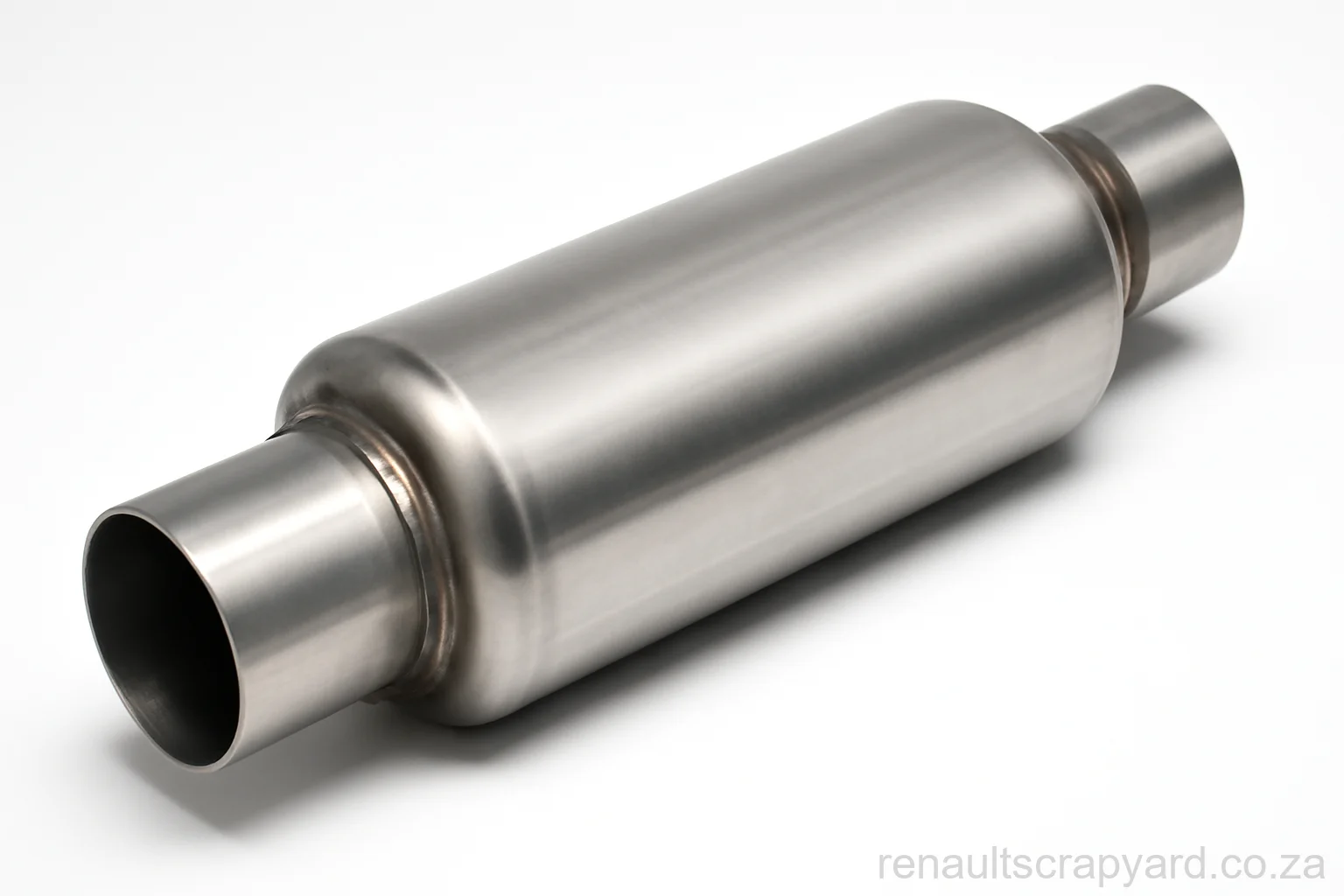
Part of our full range of Suzuki exhaust .
Resonator — pick your Suzuki
Start from the car — it's the faster route if you already know which Suzuki you're dealing with.

Suzuki Swift
hatchback

Suzuki Jimny
suv

Suzuki Ertiga
mpv

Suzuki Vitara
crossover

Suzuki Grand Vitara
suv

Suzuki Baleno
hatchback

Suzuki Ignis
hatchback

Suzuki Dzire
sedan

Suzuki XL6
mpv

Suzuki Fronx
crossover

Suzuki Brezza
suv

Suzuki Ciaz
sedan

Suzuki SX4
crossover

Suzuki Celerio
hatchback

Suzuki Alto
hatchback

Suzuki S-Presso
hatchback

Suzuki Super Carry
commercial

Suzuki Eeco
van

Suzuki Kizashi
sedan
Why two identical-looking Suzukis take different resonator
Strip away the catalogue language and what you are actually choosing between here is whether the section that has failed can be replaced on its own or whether corrosion has already taken the neighbouring joints with it.
Suzuki's current local range is petrol, so exhaust work here is about catalytic converters and lambda sensors rather than the DPF systems that dominate the diesel marques. Cylinder count is the thing people get wrong: most of the range is a three- or four-cylinder with a single system, but the older Grand Vitara was also sold here as a V6, and a V6 is a different exhaust layout entirely from the manifolds back. The naturally aspirated and turbocharged Vitara derivatives differ from each other too, and the rear-drive Super Carry and Eeco are routed unlike anything else.
So we price resonator against your specific car, not against a badge. Send through the derivative — on a Vitara whether it is the 1.6 or the 1.4 turbo, and on an older Grand Vitara whether it is a four-cylinder or a V6, and we will come back to you on what fits , what it will cost, and how soon we can have it moving.
Resonator, explained
A resonator is a tuned chamber in the exhaust that cancels one particular band of noise. It is not there to reduce overall volume — the silencer does that — it is there to kill the low-frequency drone that a small three or four cylinder engine produces at a steady cruise. Take it off and the car is not much louder at idle, but it will boom in the cabin at highway speed.
Not every car in the Suzuki range runs a separate resonator; some exhausts use a single centre box that does both jobs, so look under yours before you go shopping for a part. When a resonator does fail it is usually rust from the inside out, driven by condensation on short trips, or a broken internal baffle rattling around after a stone strike on a gravel road.
How you know resonator are on the way out
Recognise any of that? Tell us the model and year and we will go and check what we can get hold of for you.
What customers ask about resonator
What decides which resonator fits my Suzuki?
Suzuki's current local range is petrol, so exhaust work here is about catalytic converters and lambda sensors rather than the DPF systems that dominate the diesel marques. Cylinder count is the thing people get wrong: most of the range is a three- or four-cylinder with a single system, but the older Grand Vitara was also sold here as a V6, and a V6 is a different exhaust layout entirely from the manifolds back. The naturally aspirated and turbocharged Vitara derivatives differ from each other too, and the rear-drive Super Carry and Eeco are routed unlike anything else. In practice the decision in front of you is whether the section that has failed can be replaced on its own or whether corrosion has already taken the neighbouring joints with it.
What do you need from me to quote resonator?
The derivative — on a Vitara whether it is the 1.6 or the 1.4 turbo, and on an older Grand Vitara whether it is a four-cylinder or a V6. With that we can usually confirm the right part quickly, and we'll tell you whether we're quoting new, aftermarket or good used rather than leaving you to guess.
Can I just remove the resonator instead of replacing it?
You can, and plenty of people do because it seems like the cheap answer. What you get is drone — a constant, fatiguing boom at cruising speed that is far worse on a long trip than most people expect. If you drive any distance on the N-roads, put the resonator back.
What is the difference between a resonator and a silencer?
A silencer works broadly, using chambers and perforated tubes to knock down overall noise. A resonator is narrow and deliberate: it is sized so that sound reflecting inside it arrives back out of phase with one specific frequency and cancels it. That is why removing it makes one particular note much worse rather than making everything louder.
Why do exhausts rot from the inside?
Burning petrol produces water, and on a short trip the exhaust never gets hot enough to boil that condensate out. It sits in the low points of the system overnight, mixed with acidic combustion products. Cars used only for short school runs and shopping trips rot exhausts far faster than cars that do a weekly long run.
Is a used resonator worth buying?
Only if you can see it in person and check it properly, because rust starts inside where you cannot see it. Tap it along its length and listen for a dull thud instead of a ring, and look hard at the seams and the pipe stubs where it will be welded.
How do I make sure I order the right one?
Exhaust sections vary by engine size, body shape and model year even within one nameplate, and pipe diameter and hanger positions have to match. Tell us the model year and body shape through the quote form, along with the engine size, and we will work out which section you actually need.
Looking for something else?
Exhaust manifolds for Suzuki petrol engines, several of which carry the catalyst in the casting itself
Catalytic ConverterCatalytic converters for Suzuki petrol models, both direct-fit and the universal units an exhaust shop welds in
Oxygen SensorsUpstream and downstream lambda sensors for Suzuki petrol engines
Exhaust PipesFront, centre and rear pipe sections for Suzuki exhaust systems
MufflerRear silencer boxes for Suzuki models, the part that usually rots out first on the whole system
TailpipeTailpipe sections and outlets for Suzuki exhaust systems
Exhaust GasketsManifold and flange gaskets for Suzuki exhausts, the cheap parts that stop a tick becoming a blow
Exhaust HangersRubber hangers and mounting brackets that carry the exhaust under Suzuki models
Areas we cover
Areas we send resonator to.
Send the VIN — we'll find the resonator
The derivative — on a Vitara whether it is the 1.6 or the 1.4 turbo, and on an older Grand Vitara whether it is a four-cylinder or a V6 is all we need. We cross-reference it against what we can source and come back with what fits.