
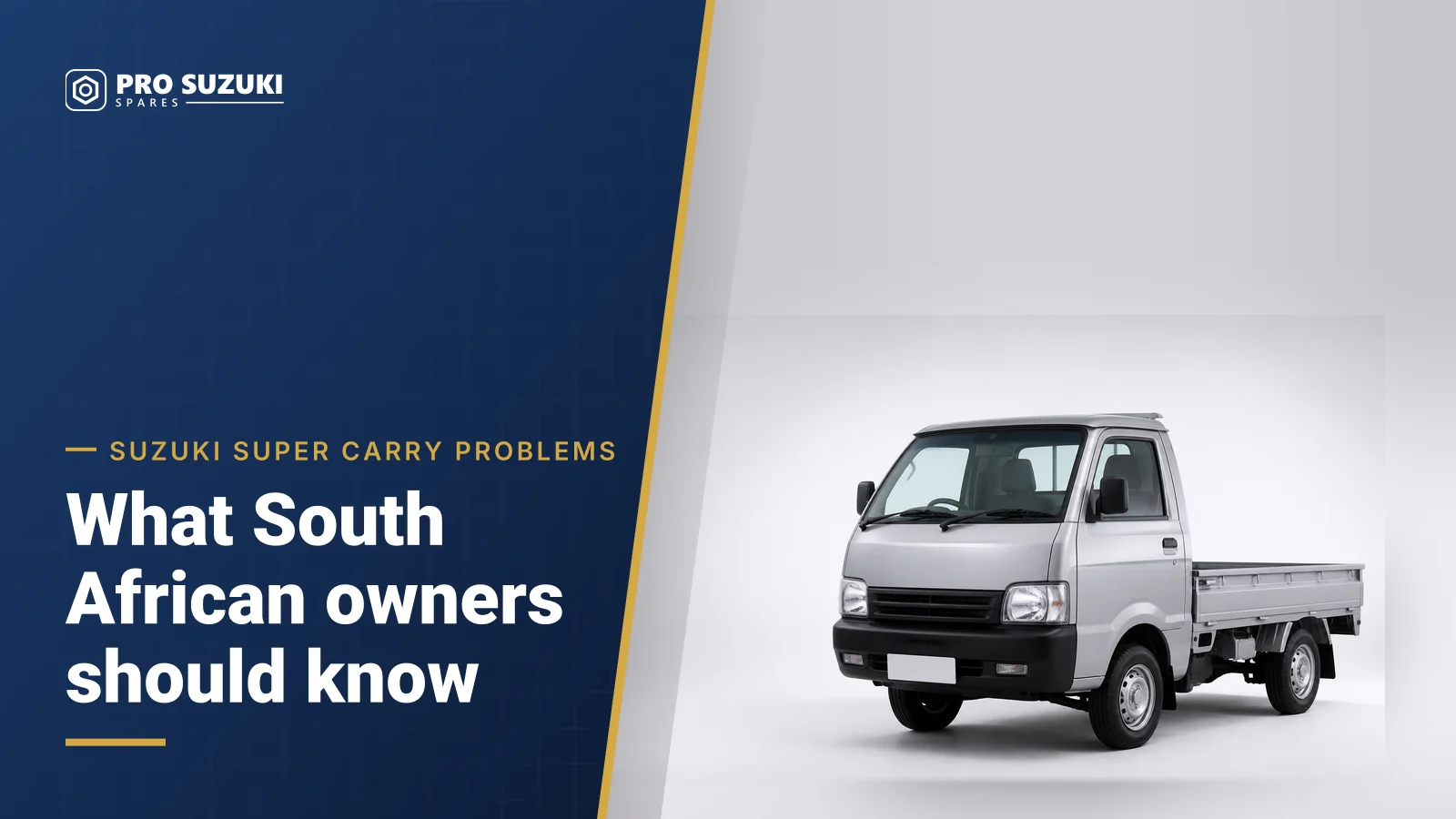
Suzuki Super Carry problems: what South African owners should know

The short version: we could not find a documented pattern of mechanical failures on the Suzuki Super Carry in South Africa, and we found no South African recall for it. What the evidence does show is that this is a basic, rear-wheel-drive work bakkie on leaf springs, rated to carry 750 kg, so the parts that matter are the ones a working load uses up: rear suspension, brakes, the clutch and tyres. The other thing worth knowing is which Super Carry you have, because the current version, which AutoTrader dates to August 2023, makes more power than the launch car.
Key takeaways
| Topic | Which Super Carry | What it actually is |
|---|---|---|
| Two engine outputs | 2016 launch cars vs August 2023 onwards | 54 kW and 101 Nm at launch, 59 kW and 104 Nm now. Check before ordering engine parts |
| No failure pattern found | All | No South African fault reports or local recall turned up in what we searched |
| Load and the rear suspension | All | 750 kg rating, leaf springs at the back. Overloading and rough roads are what wear it |
| Cab-over traits | Mostly the original car | Engine under the cab, cabin noise, no power steering, no airbags or ABS when tested |
| Indian recalls | Indian-market vehicles | Two covered a diesel South Africa never got. One seatbelt-bracket check, SA cars unconfirmed |
Which Super Carry do you have?
Suzuki Auto South Africa launched the Super Carry as its first commercial vehicle here in 2016, and South Africa was the first market outside India, where it is built, to get it.1 We can document two engine outputs since then, and the difference matters when you order engine parts.
- The launch car, from 2016. A multipoint-injected 1.2-litre four-cylinder petrol engine making 54 kW at 6 000 r/min and 101 Nm at 3 000 r/min, driving the rear wheels through a five-speed manual.1
- The current car, from August 2023. AutoTrader lists the current 1.2 derivative's introduction date as 18 August 2023, at 59 kW and 104 Nm.2 Suzuki's own specification sheet gives 59 kW at 6 000 r/min and 104 Nm at 2 900 r/min, still with a five-speed manual, a 30-litre tank and 155R13 light-truck tyres.3
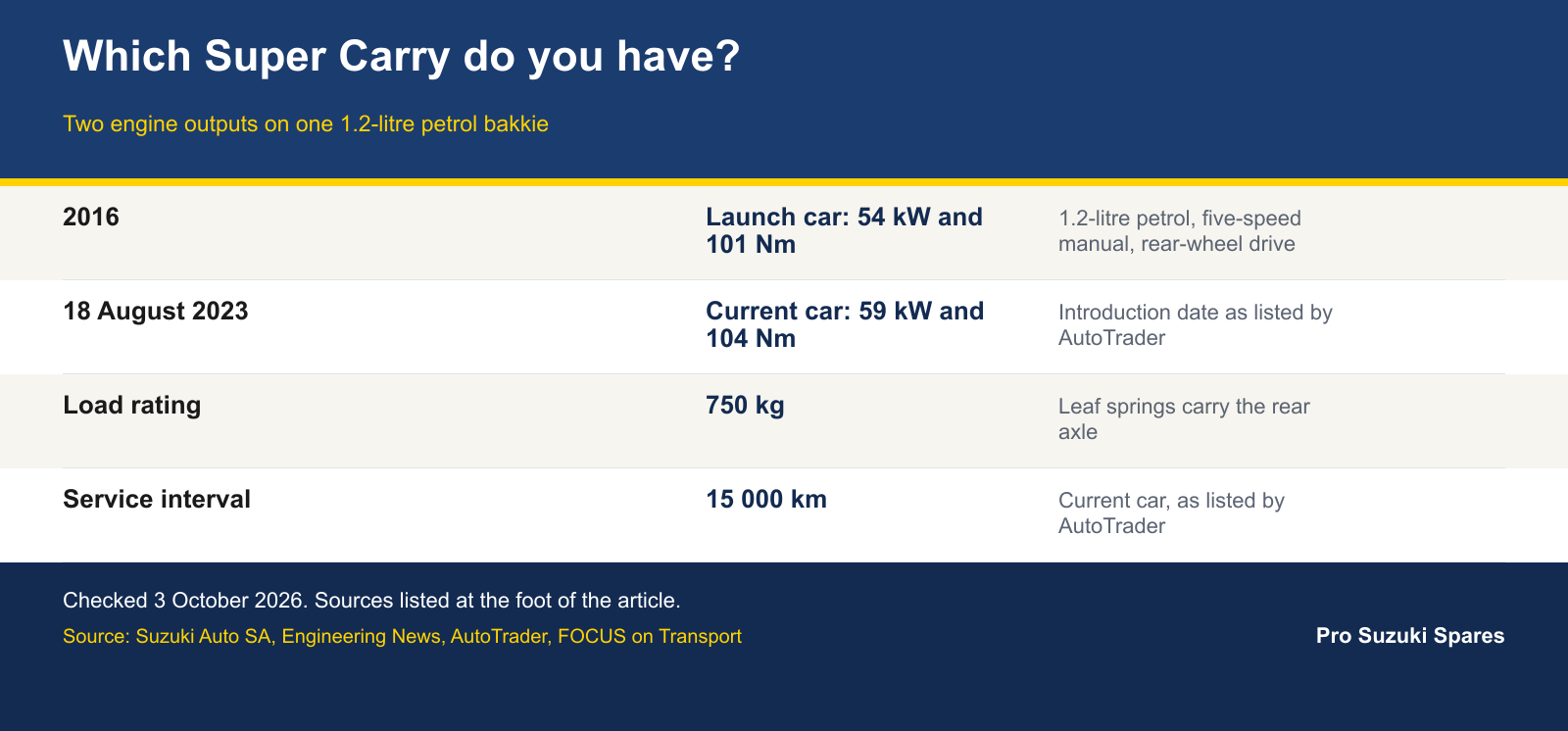
Those new figures match an update Maruti Suzuki made to the Indian Super Carry in April 2023, which it says moved to its 1.2-litre K-Series Dual Jet engine with an upgraded five-speed gearbox.4 Suzuki South Africa's specification sheet does not name the engine, so treat that as the Indian picture rather than a confirmed South African one, and read the engine number off the block before you order an engine or any engine-specific part. Both are four-cylinder petrol engines: the launch car was sold with one,1 and the only Super Carry on Suzuki's current South African range is the 1.2 petrol.33
Our Super Carry parts page covers both versions. If you are pricing a whole replacement engine, the year is the first thing we need, followed by the engine number.
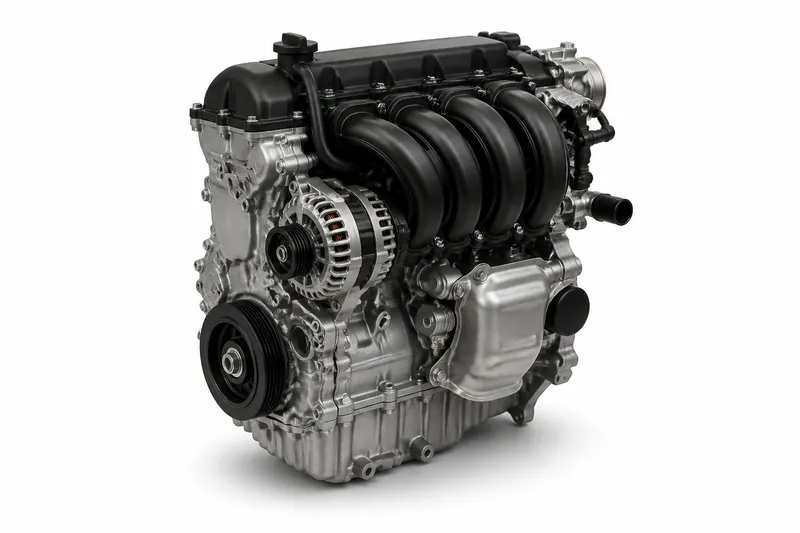
Super Carry 1.2 engine
A launch car and an August 2023 car make different outputs, so tell us the year and the engine number and we will quote the matching unit.
What we could find, and what we could not
We looked for South African owner reports of Super Carry faults on consumer-complaint sites, local motoring forums and in South African motoring press, and searched the National Consumer Commission's site for a local recall. None of it turned up a fault that more than one owner reported, and we found no South African recall notice. That is the honest answer to "what are the common problems?", with one caveat: some places owners talk, such as Facebook groups, could not be read, so this is what we found rather than proof that nothing exists.
The one owner account we could read is on Suzuki's own blog, so it is not independent. A Pretoria cleaning-services franchise that bought its first Super Carry in August 2021 and later added a second told Suzuki: So far, we have had no incidents with our two vehicles.
5
So rather than invent a list of failures, the rest of this guide sticks to what is documented. That means how the vehicle is built, what Suzuki itself says about running it loaded, the recalls you may read about online, and the parts a working bakkie gets through.
Load, leaf springs and the rear suspension
Suzuki rates the Super Carry for a 750 kg load,6 and the rear axle sits on leaf springs.7 FOCUS on Transport's road test measured the load bed at 2 183 mm by 1 488 mm, with fixed sides and access only through the rear tailgate.7 A deck that size makes it easy to load past the rating, and the rating is what the springs, brakes and tyres are built around.
Suzuki's own advice on driving a heavily loaded vehicle is blunt about bumps: Your suspension has less ability to soak up bumps and could be damaged.
8 The same guide warns that stopping distances grow with the extra weight and tells drivers to set tyre pressures to the manufacturer's figure for the load.8 On a vehicle that carries a load most of the working day, that advice applies every day, not just on holiday.
What to look for on your own vehicle is practical rather than mysterious. Watch for a back end that sits lower than it used to when empty, clunks from the rear over bumps, or a deck that leans to one side. Any of those is a reason to have the springs, their bushes and the rest of the suspension looked at before a worn part gives up on the road.
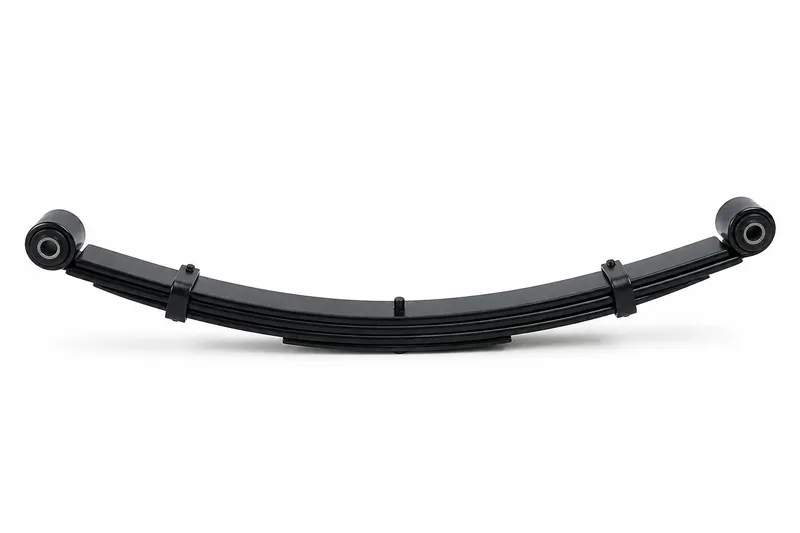
Rear leaf springs and bushes
If the back of your Super Carry sags, knocks or leans, we can quote a spring pack, the bushes or both. Tell us which side and whether it is one leaf or the whole pack.
Leaf springs are listed with the other suspension springs if you are pricing a pair.
Living with the cab-over layout
The Super Carry is a cab-over design, and some of what owners notice is simply how it is built rather than anything going wrong. FOCUS on Transport's road test of the original 54 kW car found that with the engine below the cab and the intake stacked behind the driver's head, cabin noise is a little on the high side
.7 The same test noted that the driver's seat has a fixed back and adjusts only for reach, that power steering is not fitted, and that the door locks, windows and mirrors are all manually operated.7
BizNews's 2017 drive of the same car found no blower fan for the cabin, just vents that let outside air in while the vehicle is moving. It also pointed out that the brake fluid reservoir is hidden under dash panels,9 which is worth knowing the first time you go looking for it to check the level.
Safety equipment: the original car FOCUS tested had no airbags, no anti-lock brakes and no electronic driver aids.7 Suzuki South Africa's current specification sheet does not list airbags or ABS either, so if they matter to you, confirm the exact equipment of the vehicle you are buying with a dealer rather than assuming the 2023 update added them.
Recalls you may read about online
Search for Super Carry recalls and you will find Indian ones, because the vehicle is built and sold in large numbers there. None is a South African recall, and two of them covered a diesel version.
- 2018, India, diesel only. Maruti Suzuki recalled 640 diesel Super Carrys in October 2018 to check fuel pump material, and 5 900 diesel units in December 2018 over possible fuel leaks from the fuel filter.10 Both South African versions we could document are petrol, so neither recall covers them.
- 2022, India, seatbelt bracket. Maruti Suzuki recalled 5 002 Super Carrys built between 4 May and 30 July 2022 to check the torque on a bolt holding the passenger seatbelt buckle bracket, which it said could loosen in rare cases.10 This was an Indian campaign. Whether any South African vehicles were built in that window is not something we could confirm, so if yours is a 2022 vehicle, ask a Suzuki dealer to check its VIN.
Servicing and the parts a work bakkie gets through
AutoTrader lists the current Super Carry's service interval as 15 000 km,2 and Suzuki sells it with a three-year or 100 000 km mechanical warranty and roadside assistance that includes breakdown towing.6 When FOCUS on Transport tested the launch car, it came with that warranty and a six-year anti-corrosion warranty, but no service plan.7 A vehicle doing deliveries can cover 15 000 km quickly, so keep an eye on the odometer as well as the calendar.
There is no automatic Super Carry here, only the five-speed manual,3 so every one has a clutch, and a clutch is a wear part on any manual vehicle. Stop-start delivery work with a load on the back is hard on any clutch. A clutch that slips under load, or bites higher up the pedal than it used to, is the sign to price a kit before it leaves you stranded with a full deck. The Super Carry gearbox and clutch parts page covers the rest of the driveline, and the clutch plate itself is under clutch discs.
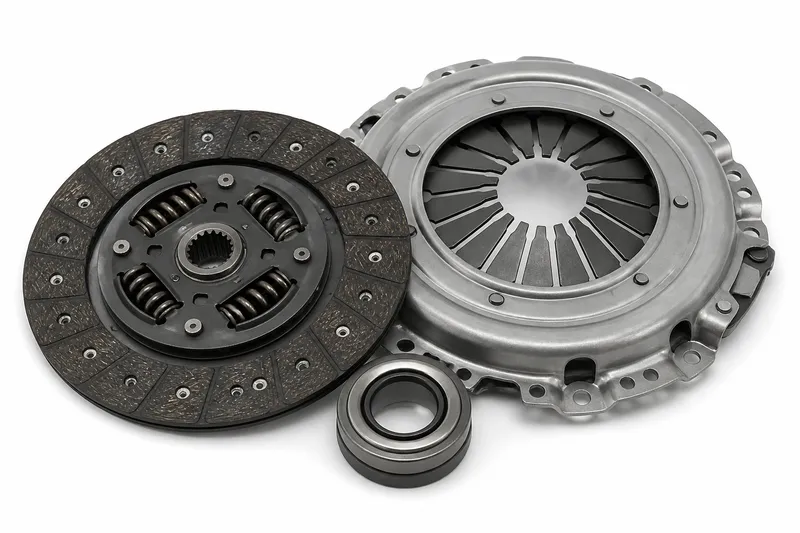
Super Carry clutch kit
Slipping under load or a high biting point are the usual signs of a worn clutch. A full kit means the pressure plate and release bearing are done in the same job.
For anything else under the cab, from filters and plugs to the cooling system, start with Super Carry engine parts and tell us the year.
Super Carry questions
What are the common problems with the Suzuki Super Carry?
We found no documented pattern of mechanical failures on South African Super Carrys and no South African recall. The issues worth knowing are built-in traits, such as cabin noise and no power steering on the original car, and the wear that comes with carrying loads on leaf springs: rear suspension, brakes, tyres and the clutch.
Are Suzuki Carry vans reliable?
The Carry van is a different vehicle. Suzuki sold a small Carry van here in the 1980s, nicknamed the "halfloaf",11 and we have no reliability data on it. For the Super Carry bakkie, we found no South African fault pattern in what we searched, and the one owner account we could read reported no incidents with two vehicles.
What is the Suzuki Super Carry's fuel consumption?
Suzuki quotes the current Super Carry from 5.9 litres per 100 km.3 For the original car, FOCUS on Transport reported that Suzuki's own long-distance test with a full load returned an average of 6.7 litres per 100 km.7 A heavily loaded vehicle in town traffic will use more than either figure.
What engine is in the Suzuki Super Carry?
A 1.2-litre four-cylinder petrol engine in both South African versions we could document. Launch cars make 54 kW and 101 Nm, and the current car makes 59 kW and 104 Nm. Maruti Suzuki says the Indian update with the same output uses its K-Series Dual Jet engine, but Suzuki South Africa does not name the engine, so read the engine number before ordering engine parts.
Before you act on this
This guide is research, not a diagnosis of your car. Pro Suzuki Spares supplies parts — we are not a licensed repair workshop, and we have not seen your vehicle. Have a qualified technician confirm the fault before you buy a part or start a job. Any rand figures quoted are sourced ranges for context, not a quote, and they move.
Sources (11)
ShowHide
The small numbers in the guide link to the source behind each claim.
- 1 Engineering News — Suzuki makes South African commercial-vehicle debut: 2016 launch, first market outside India, 54 kW / 101 Nm 1.2 petrol, five-speed manual, rear-wheel drive (checked 3 Oct 2026) — SA press a b c
- 2 AutoTrader — Suzuki Super Carry 1.2 specifications: introduction date 18/08/2023, 59 kW, 104 Nm, 15 000 km service interval (checked 3 Oct 2026) — SA press a b
- 3 Suzuki Auto South Africa — Super Carry features and specs: 59 kW / 104 Nm, 5-speed manual, 30-litre tank, 155R13LT tyres, from 5.9 l/100 km (checked 3 Oct 2026) — Manufacturer a b c d e
- 4 Maruti Suzuki India — press release, April 2023: Indian Super Carry moves to the 1.2 K-Series Dual Jet engine, 59.4 kW / 104.4 Nm, upgraded five-speed (checked 3 Oct 2026) — Manufacturer (India) ↩︎
- 5 Suzuki Auto South Africa blog — 'Why I love my Super Carry': owner interview, two vehicles, no incidents (checked 3 Oct 2026) — Manufacturer blog ↩︎
- 6 Suzuki Auto South Africa — Super Carry: 750 kg load capacity, three-year / 100 000 km mechanical warranty, roadside assistance (checked 3 Oct 2026) — Manufacturer a b
- 7 FOCUS on Transport — 'Going light' road test of the Super Carry: leaf-spring rear axle, load bed, cabin noise, no power steering, no airbags or ABS, warranty, laden fuel test (checked 3 Oct 2026) — SA press a b c d e f g
- 8 Suzuki Auto South Africa blog — How to drive a heavily loaded car: suspension, stopping distances, tyre pressures (checked 3 Oct 2026) — Manufacturer blog a b
- 9 BizNews — Suzuki Super Carry: Calling small business owners (Feb 2017): no cabin blower, brake fluid reservoir under the dash panels (checked 3 Oct 2026) — SA press ↩︎
- 10 Autocar Professional (India) — Maruti Suzuki recalls 5,002 Super Carry to check seatbelt buckle bracket; also the 2018 diesel recalls (checked 3 Oct 2026) — Indian press a b
- 11 AutoTrader — Suzuki Super Carry, a workpony bakkie?: the 1980s Suzuki Carry van nicknamed 'halfloaf' (checked 3 Oct 2026) — SA press ↩︎
Need the part this guide points at?
Give us the model, the year and what failed. We will come back on what we can source and what it costs.
More Suzuki guides
Suzuki Jimny problems: what South African owners actually report
The Jimny faults with evidence behind them — the 2019 fuel pump recall confirmed for South Africa, the door harness action, and the mud-and-water failures that account for most of the rest.
Suzuki Dzire problems: what South African owners and testers report
The Dzire issues with real South African evidence behind them: the jerky AMT on 2018-2025 cars, worn ex-e-hailing cars, crosswinds and thin paint, and what testers say about the 2025 three-cylinder and CVT.